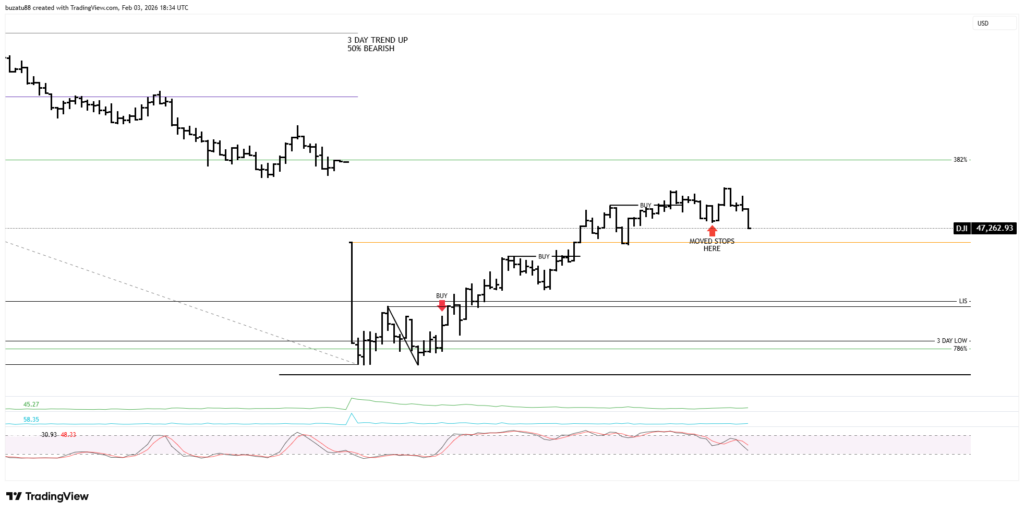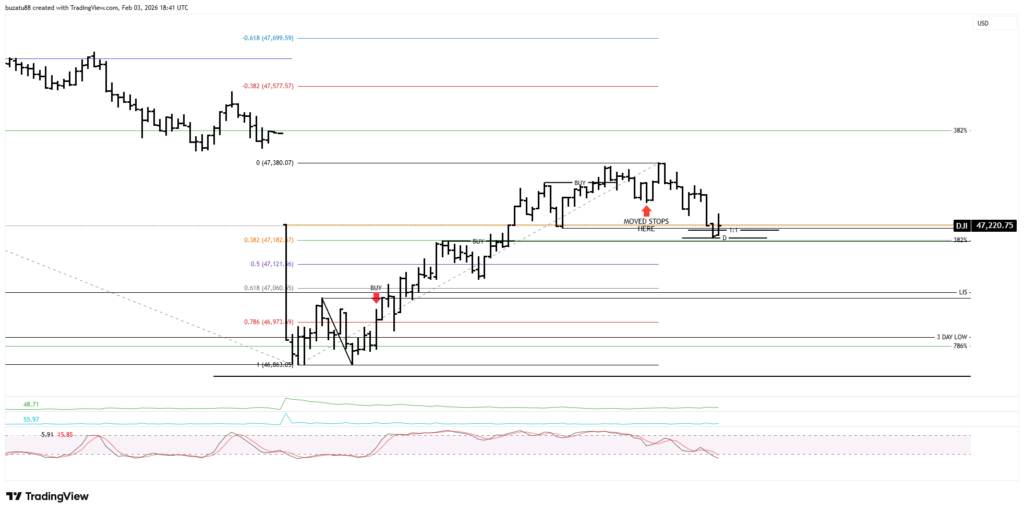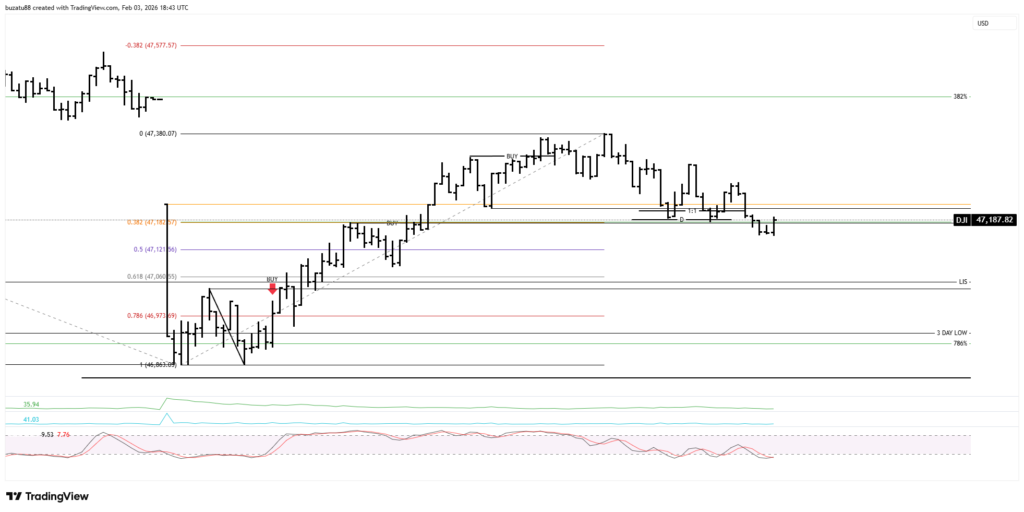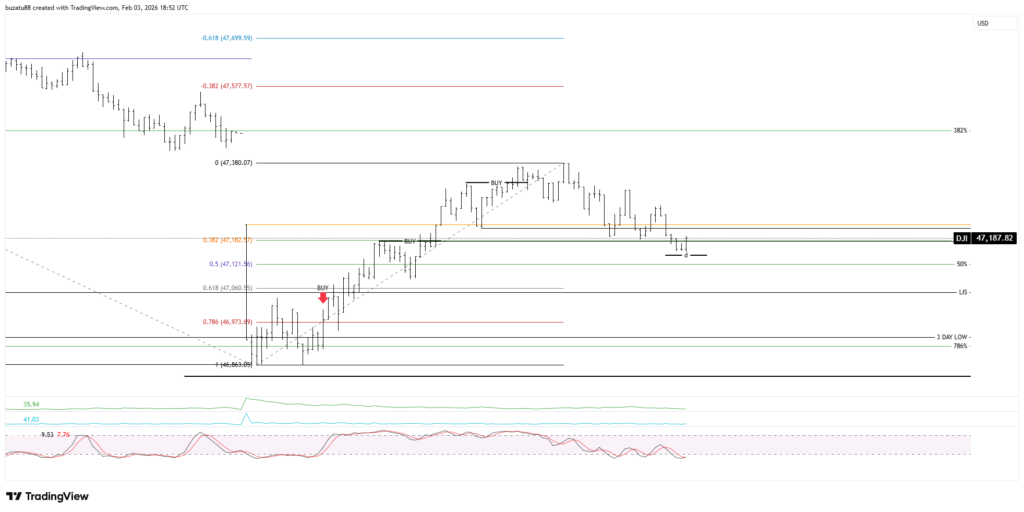
Trading One Day At A Time

Dow Jones Trading Patterns I Use: Fibonacci, ABCD, Gartley & Market Structure
Market Patterns I Trade

Understanding Dow Jones trading patterns is essential if you want to trade the market with structure instead of guessing. Over time I have focused on a small group of patterns that repeatedly appear in the market.

These patterns combine Fibonacci ratios, market structure, and price action. When multiple patterns align together, they create high-probability trading opportunities.

Below are the main patterns I use every day when trading the Dow Jones.

Fibonacci Ratios and Natural Numbers

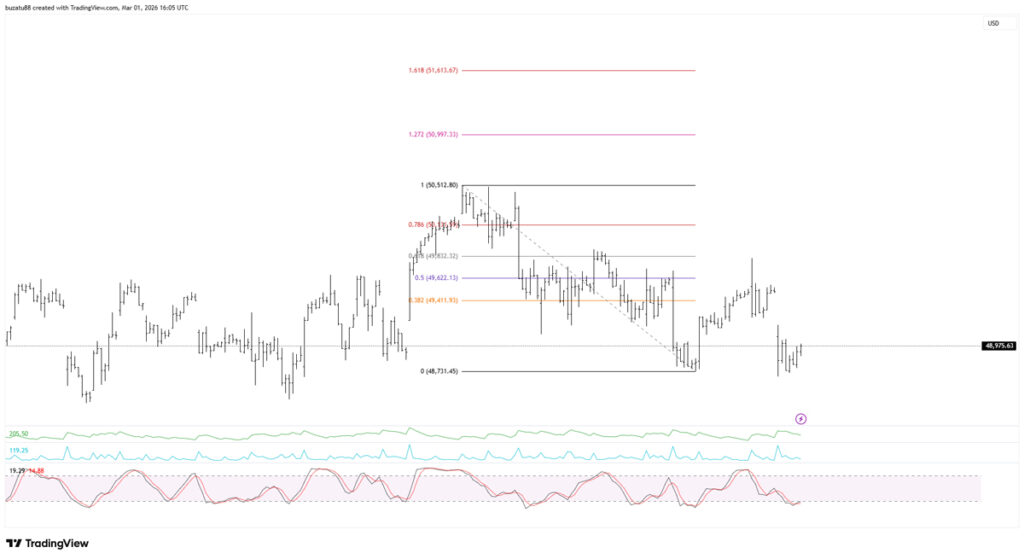
Fibonacci ratios play an important role in market structure and price behaviour.

For retracements, I primarily use:

  • 38.2%

  • 50%

  • 61.8%

  • 78.6%

In strong trending markets, the price often retraces only to the 38.2% or 50% levels before continuing in the direction of the trend.

When the market becomes weaker or starts to reverse, deeper retracements such as 61.8% or 78.6% often appear.

For expansions, which occur when the market extends beyond previous price swings, I focus on:

  • 127.2%

  • 161.8%

These levels frequently mark areas where the market either accelerates or begins to reverse.

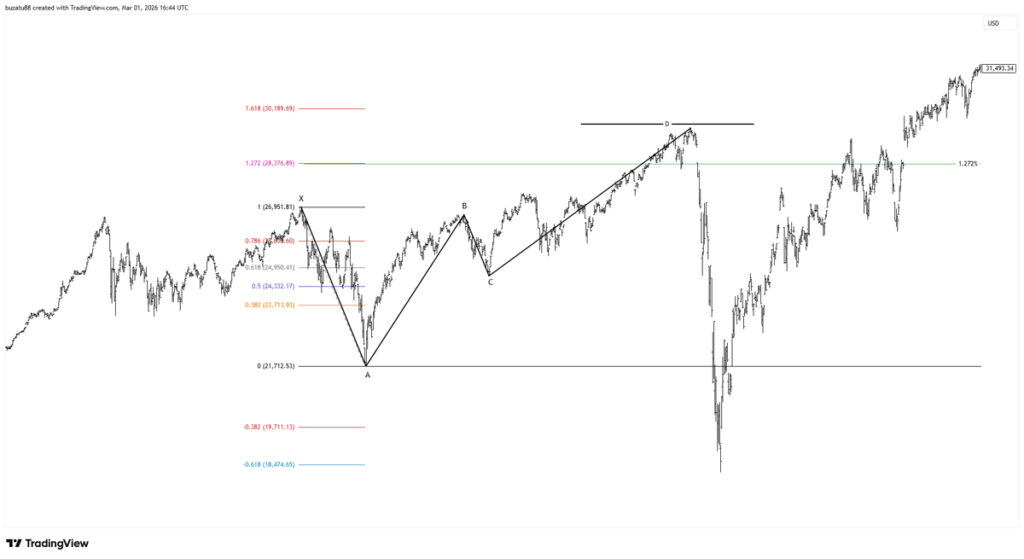
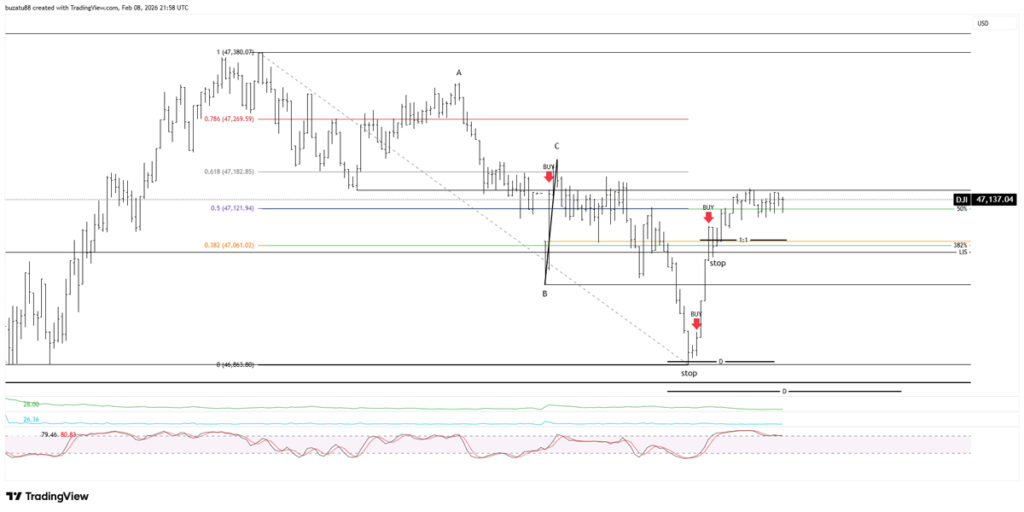
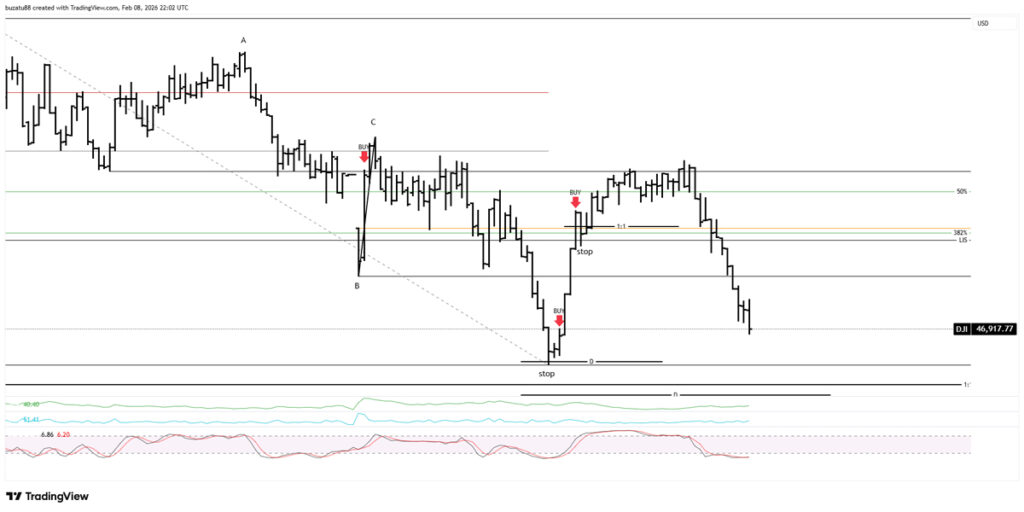
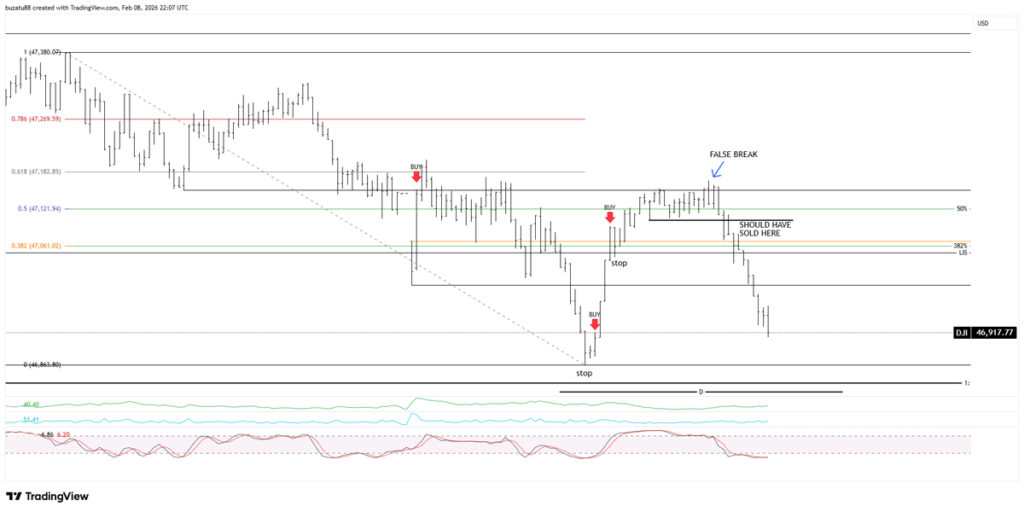
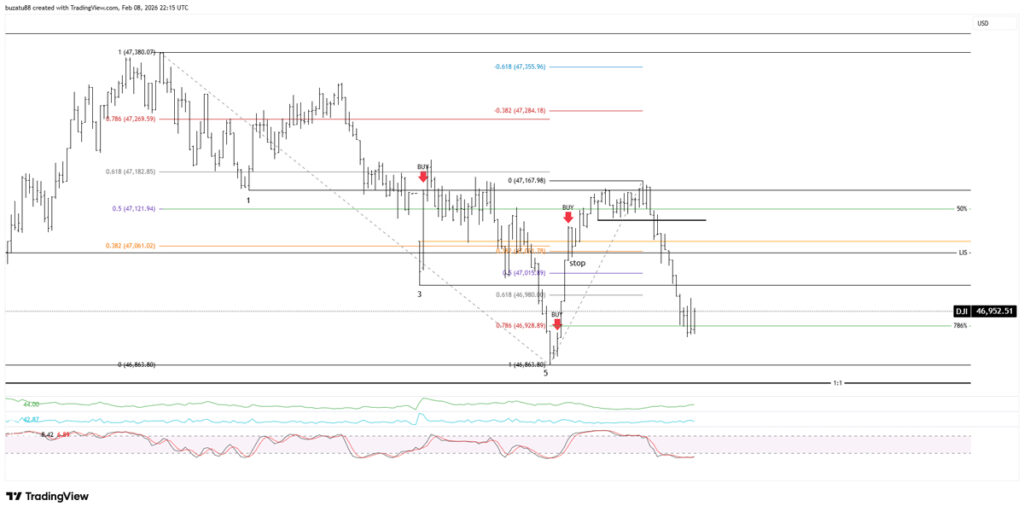
Fibonacci ratios and natural numbers illustrated on the Dow Jones Chart

The ABCD Pattern

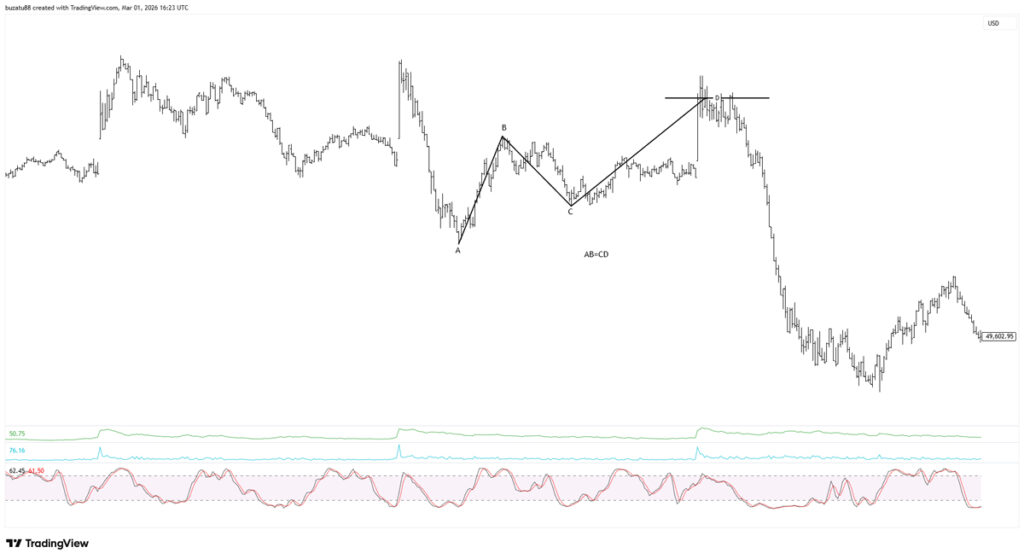
The ABCD pattern is one of the simplest and most powerful price patterns.

It consists of two legs that are roughly equal:

  • AB = CD

The market moves from A to B, then retraces to C, before making a second move from C to D.

When the pattern completes, the market often reacts in the opposite direction.

Sometimes the CD leg extends slightly beyond the AB leg. Ideally we want perfect symmetry, but markets are rarely perfect. Traders must learn to adapt when price action is slightly different.

If the pattern fails to produce a reversal, it usually means the trend is strong, and trading in the direction of the trend can still be safe.

AB=CD pattern illustrated on the Dow Jones chart

The Gartley Pattern

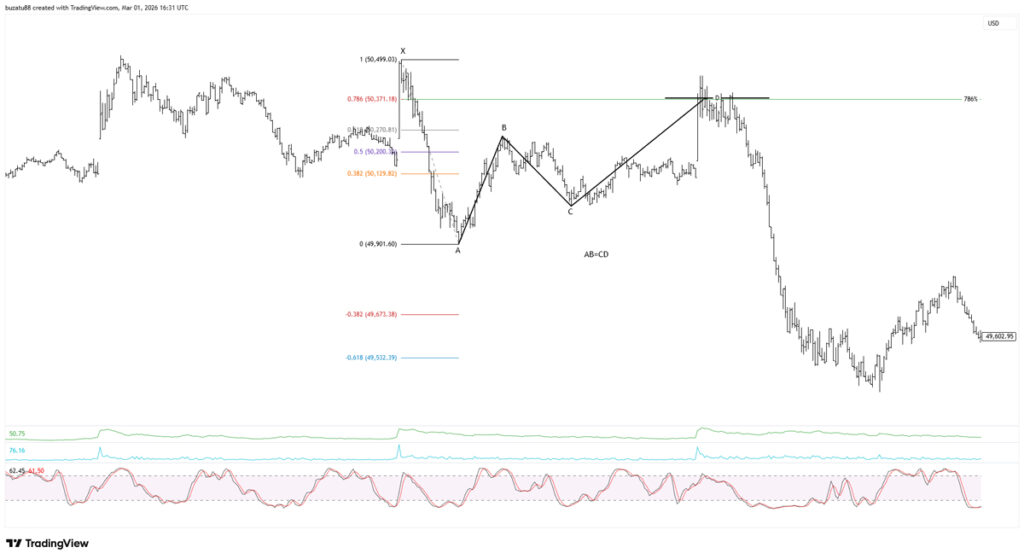
The Gartley pattern combines Fibonacci ratios with the ABCD structure.

The retracement from X to A typically reaches one of these levels:

  • 38.2%

  • 50%

  • 61.8%

  • 78.6%

In the example shown in the chart, the market reversed from a 78.6% Gartley pattern that also formed a perfect ABCD structure.

Unlike a classic ABCD, the CD leg in a Gartley does not always equal the AB leg. Instead, it can extend to:

  • 38.2% of AB

  • 61.8% of AB

When these ratios align with other market structures, the probability of a reversal increases.

Gartley pattern illustrated on the Dow Jones chart

The Butterfly Pattern

The Butterfly pattern is similar to the Gartley but with one important difference.

In this pattern, the ABCD structure extends beyond the original XA swing, reaching an extension of:

  • 127.2%

  • 161.8%

Butterfly patterns are commonly found at major market tops and bottoms.

For example, before the major market drop during the COVID crash, the Dow Jones showed a massive 127.2% Gartley pattern on both the daily and weekly charts.

This type of alignment across multiple timeframes often signals significant market turning points.

COVID market drop from a Butterfly pattern

Three Drives to a Top or Bottom

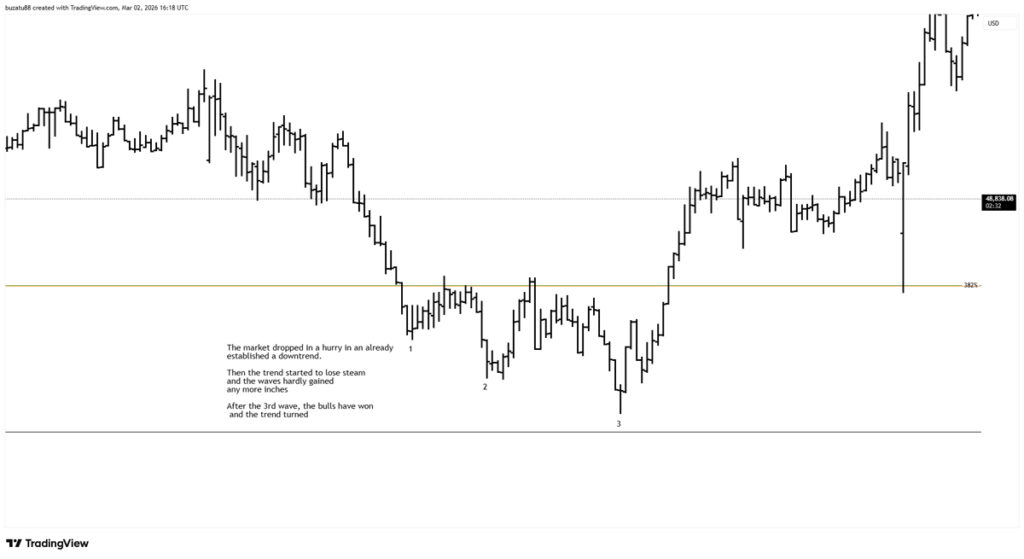
After a strong trend, the market can begin to lose momentum.

One sign of this is the Three Drives pattern, where the price forms three pushes in the same direction.

During this process:

  • Each wave begins to overlap

  • The market struggles to push further

  • Momentum slowly fades

This pattern often appears before a major reversal, especially when it forms near important Fibonacci levels or resistance zones.

Lines in the Sand (LIS)

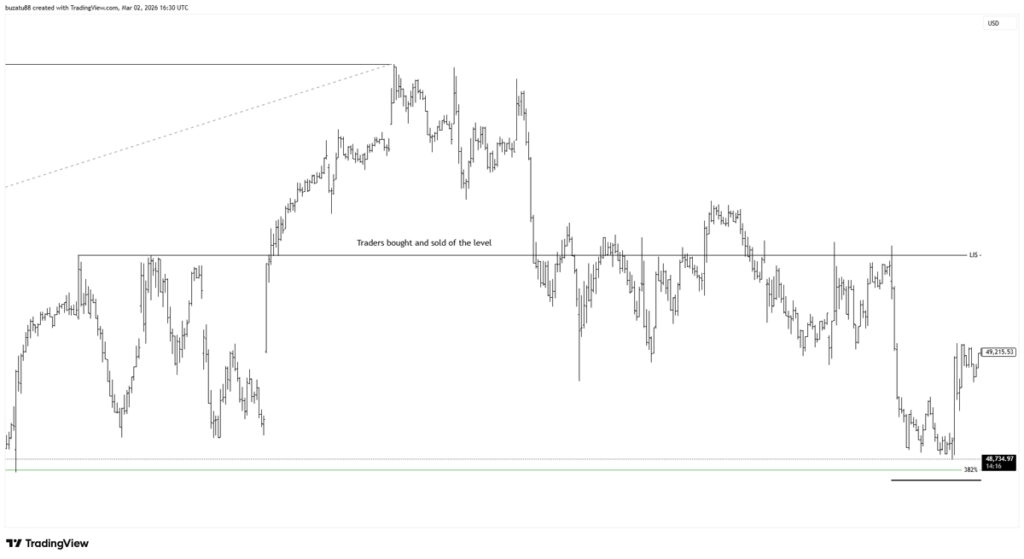
A Line in the Sand (LIS) is created when the market forms a double top or double bottom.

These levels often become key support and resistance zones.

The price will frequently test these areas multiple times, switching between support and resistance.

Traders often treat the LIS as a balance point, where buying or selling pressure becomes clear.

However, I prefer to trade these levels only when they align with a Fibonacci ratio.

Double Top / Double Bottom Pullback

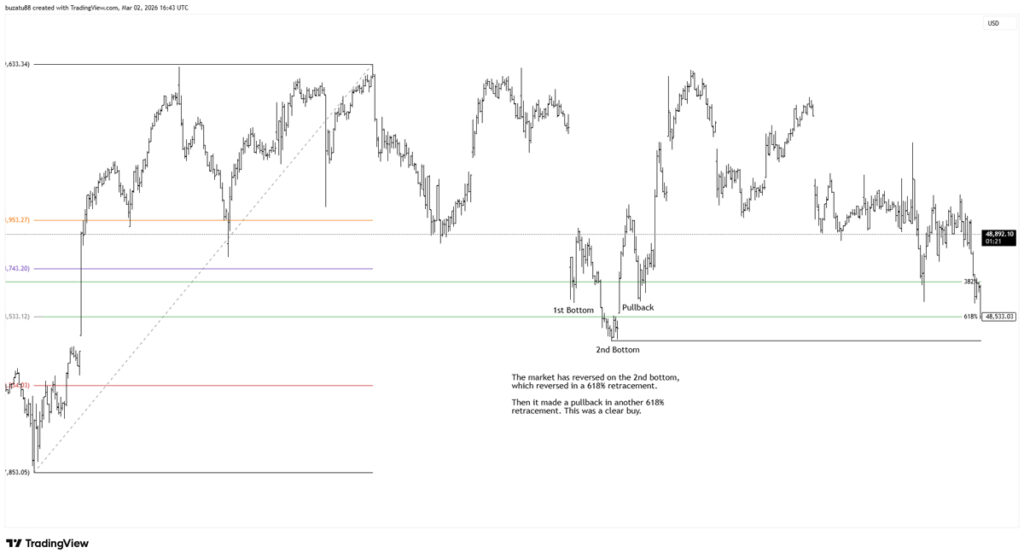
Another reliable pattern is the Double Top Pullback (DT/PB) or Double Bottom Pullback (DB/PB).

In this setup:

  1. The market forms a double bottom or double top

  2. The second bottom/top slightly exceeds the first

  3. Price then retraces in a pullback

  4. The market resumes or reverses the trend

This pattern forces the trader to wait for confirmation, which often results in more reliable trades.

The Double Bottom pattern illustrated on the Dow Jones chart

Make or Break Levels (MOB)

Make or Break levels (MOBs) are areas where the market previously found strong support or resistance.

When trading intraday, I usually focus on market data from the last three days.

The market often leaves clues about future direction based on how it reacts to these levels.

For example:

  • If the market moves above a previous resistance level and holds, the trend may strengthen.

  • If it fails and reverses, it often signals weakness.

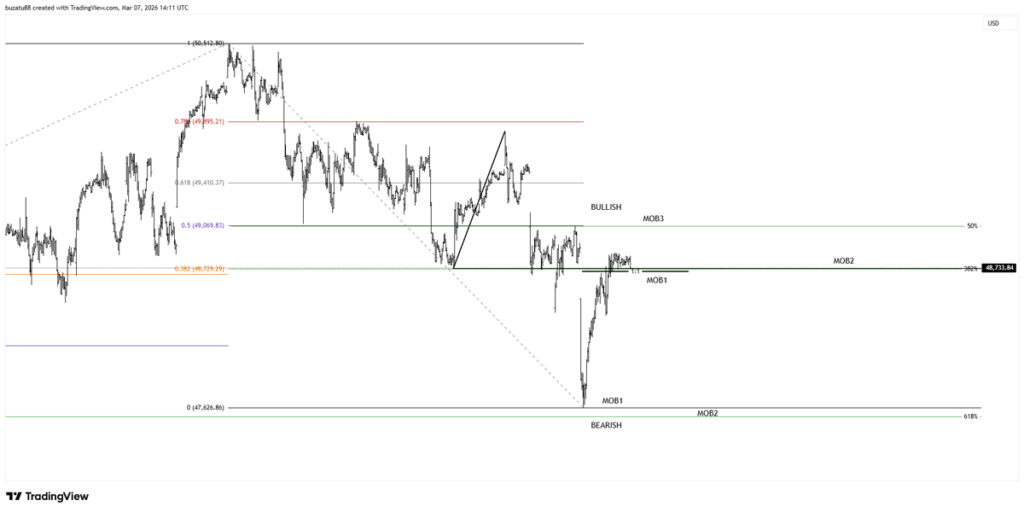
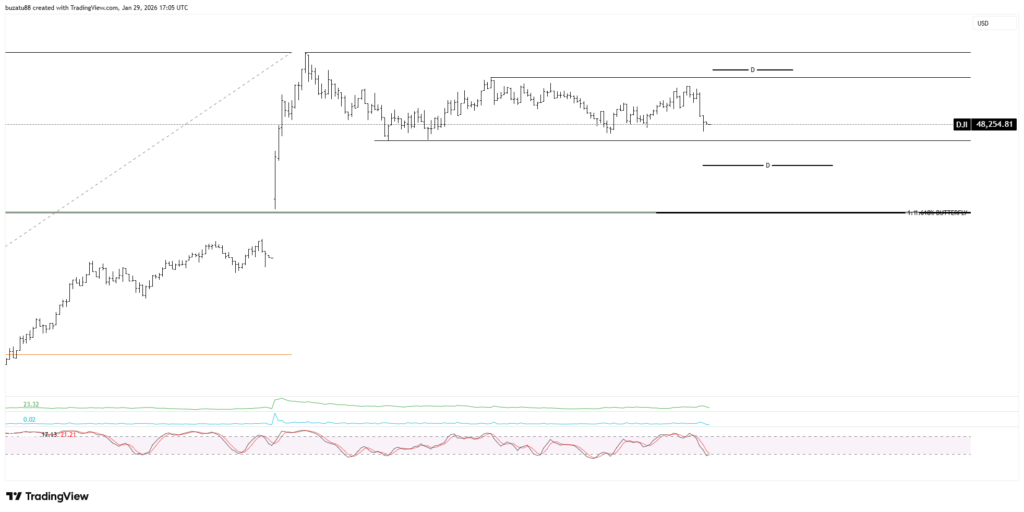
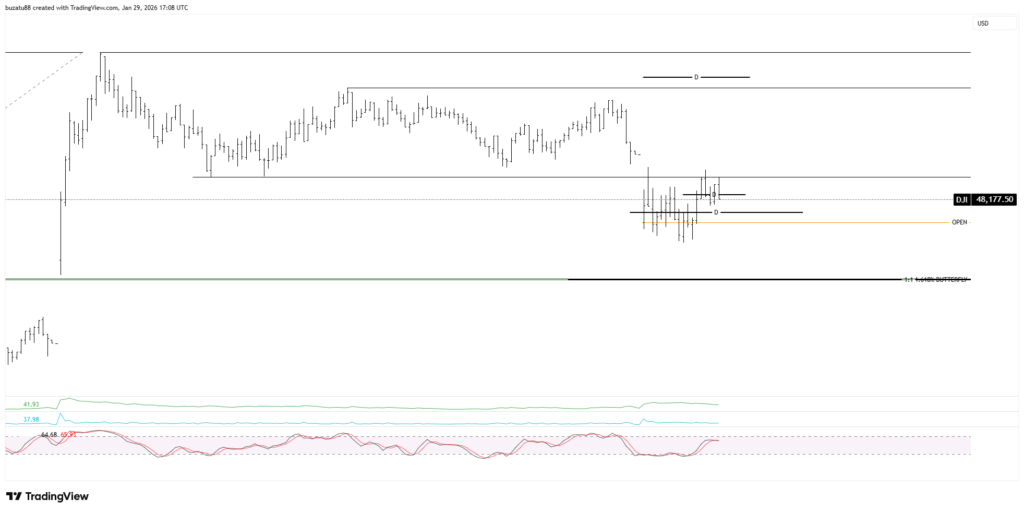
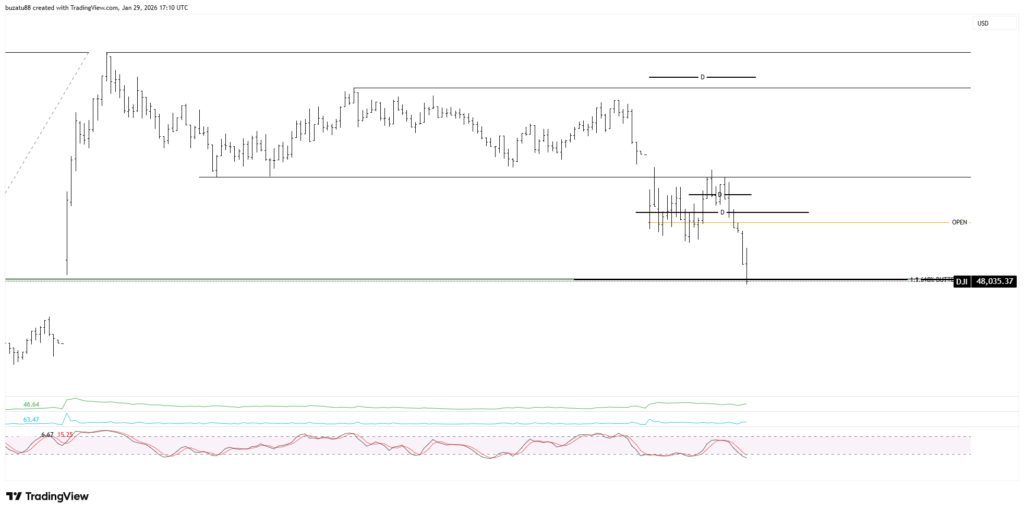
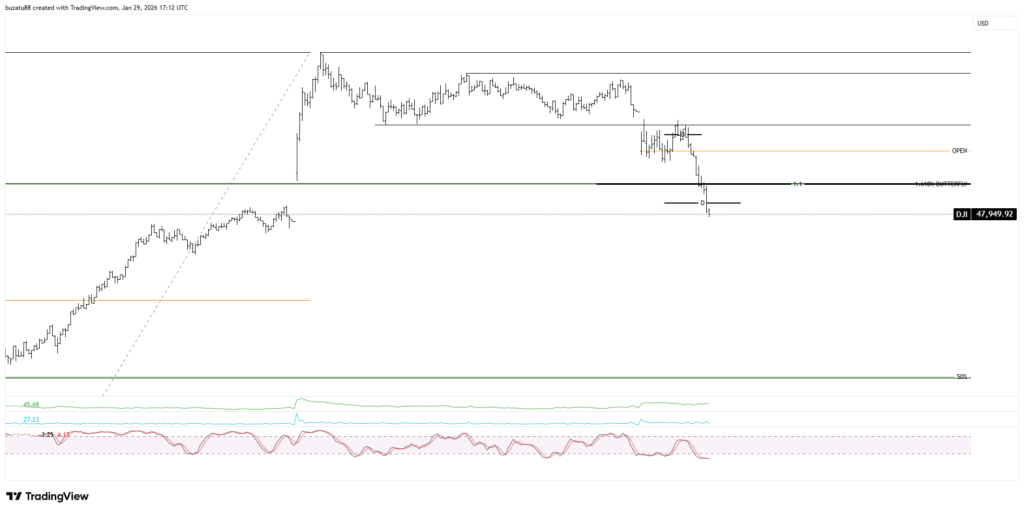
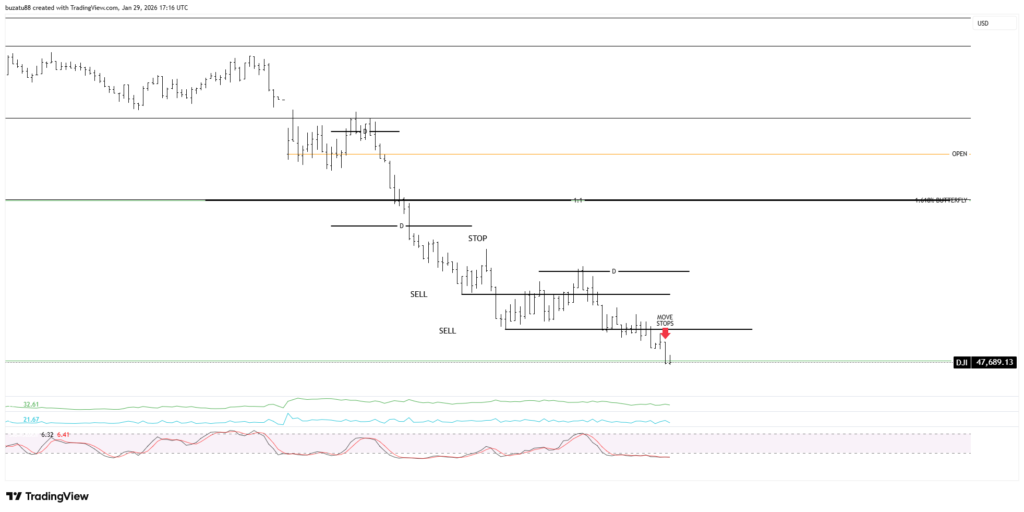
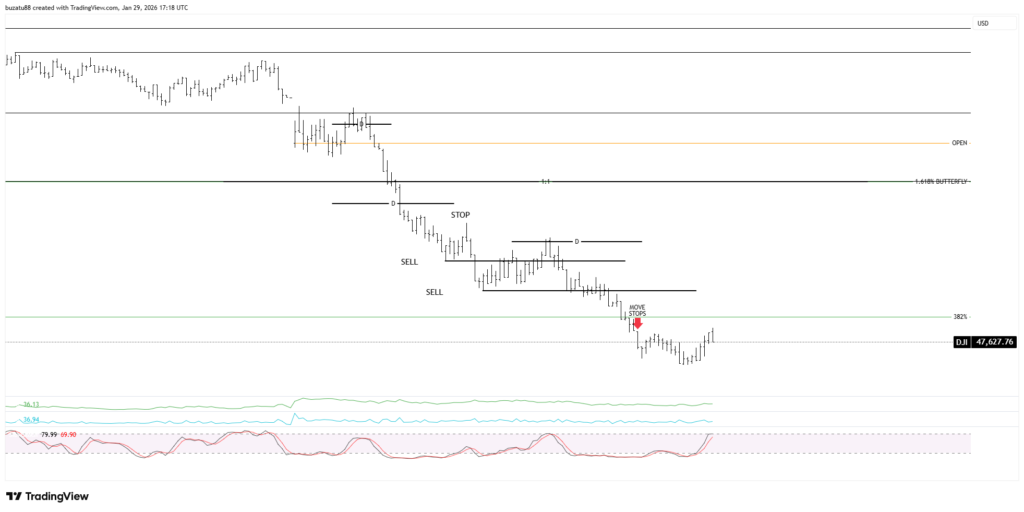
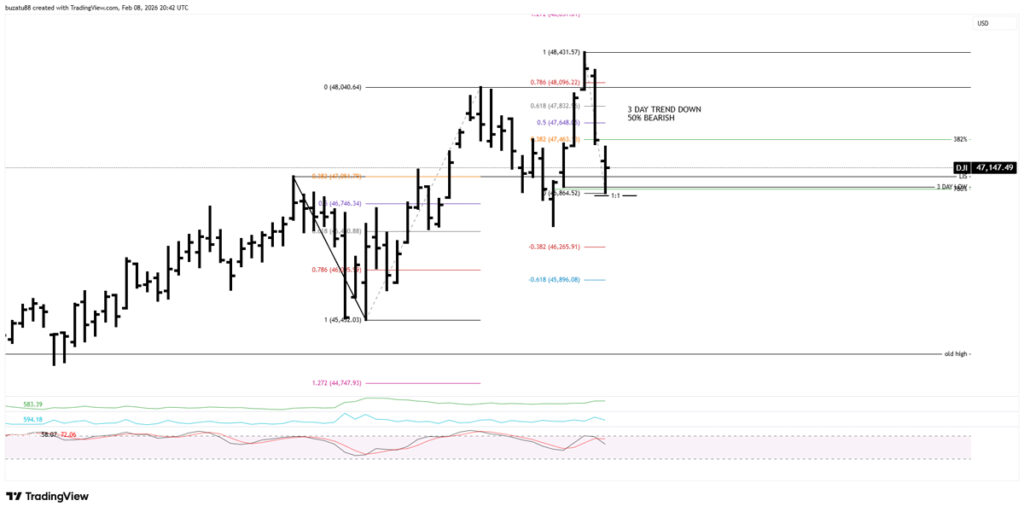
Make or break levels on the Dow Jones 3 min Chart

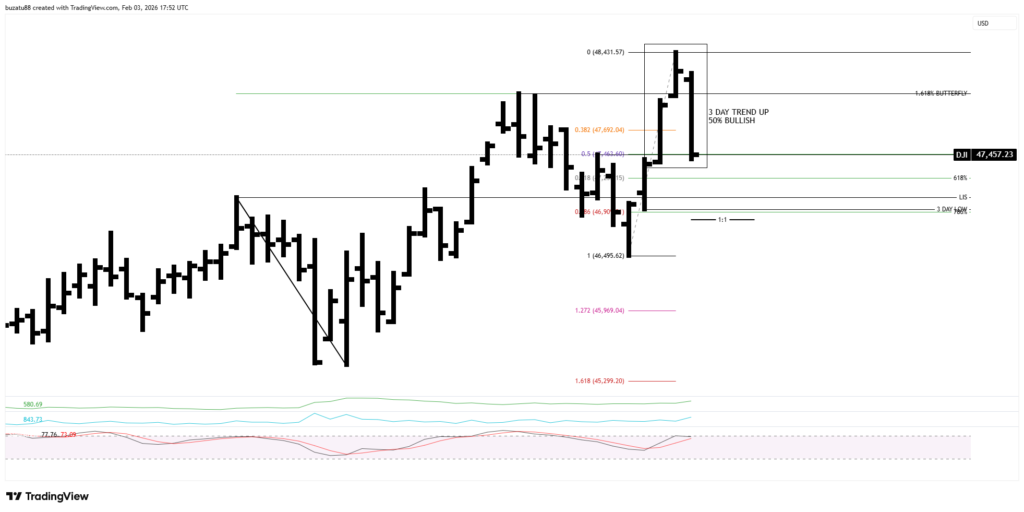
Example: Market Structure Analysis

In the above chart:

  • The market surpassed the 1:1 level after the previous correction (MOB1).

  • This suggested the trend might be weakening.

However, the price immediately encountered a 38.2% Fibonacci retracement, which acted as strong resistance.

This became MOB2, while the 50% retracement acted as MOB3.

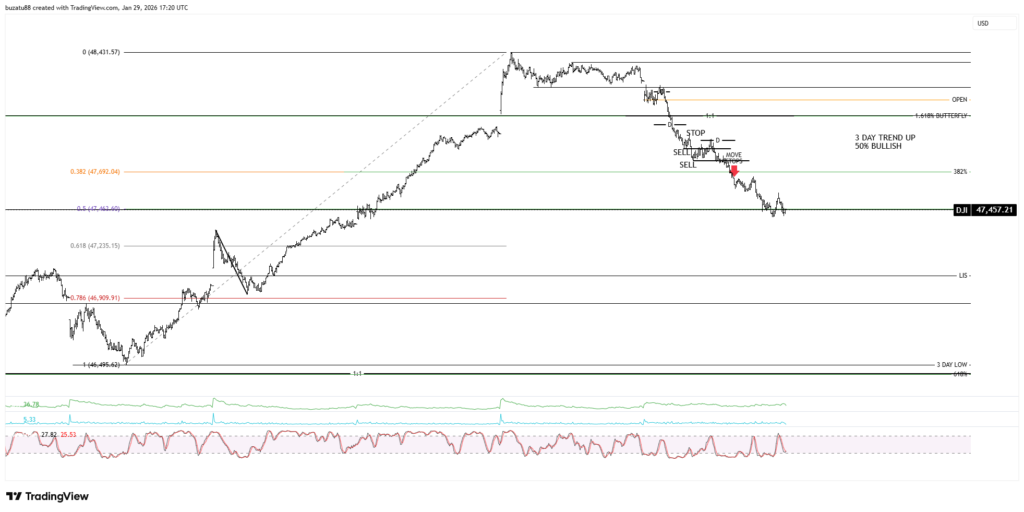
As long as the market remains below the 50% retracement, the market structure must be considered as still weak.


Bullish Scenario

For the bullish case to develop:

  • Price must hold above the 38.2% retracement

  • Then break above the 50% level

If this happens, the market has overcome the main technical resistance levels, and buying opportunities may appear.


Bearish Scenario

For the bearish case:

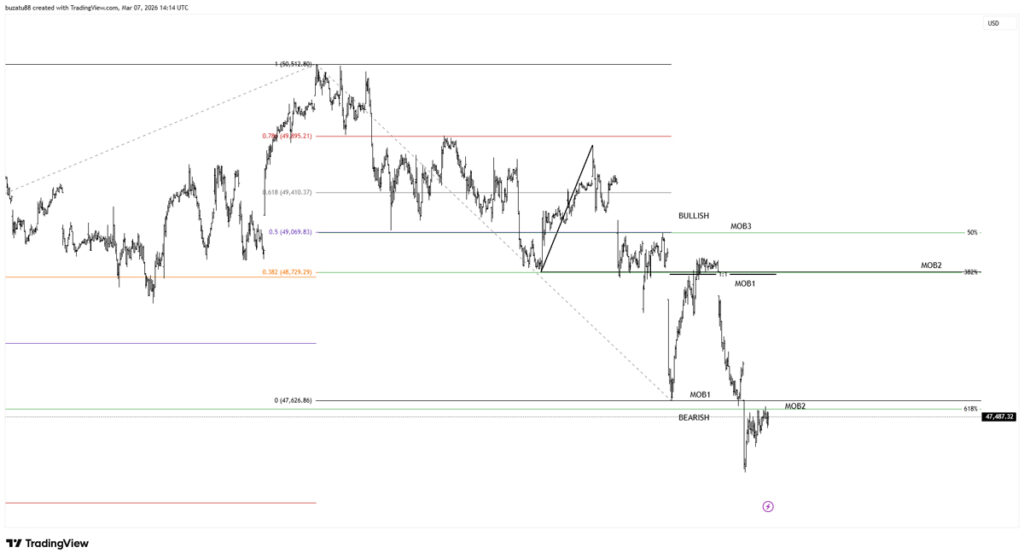
  • Price must break below the 47,626 low (MOB1)

  • Then move through the 61.8% Fibonacci level (MOB2)

If these levels fail, it suggests that downward momentum remains strong.

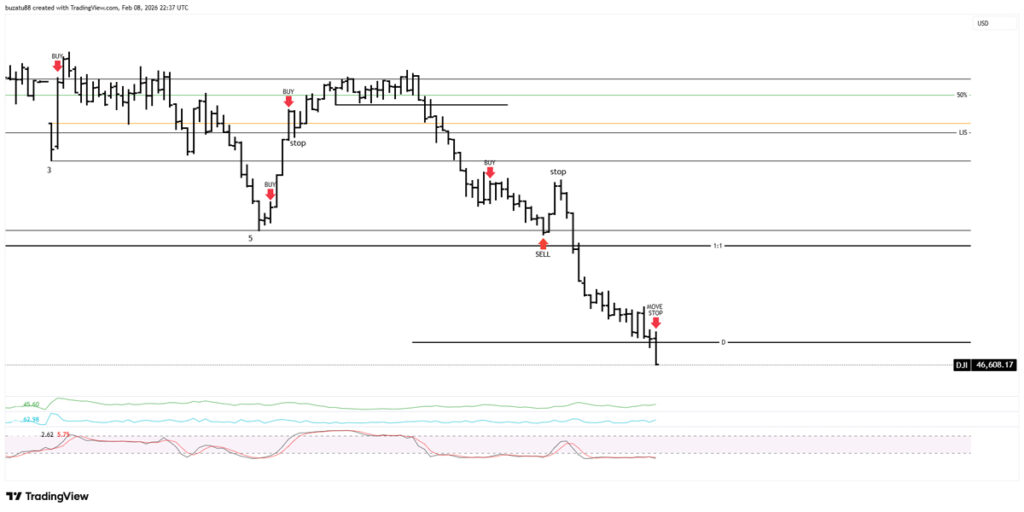
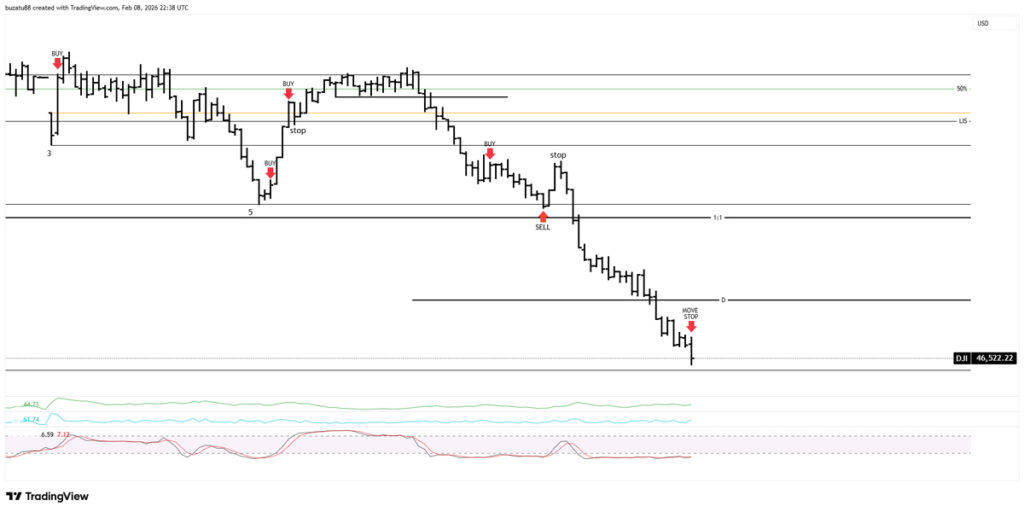
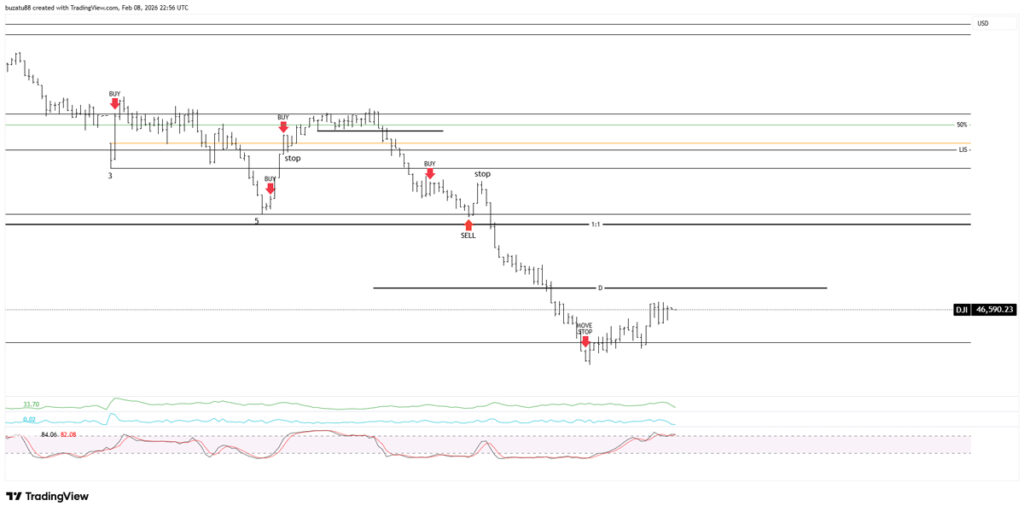
This is what happened

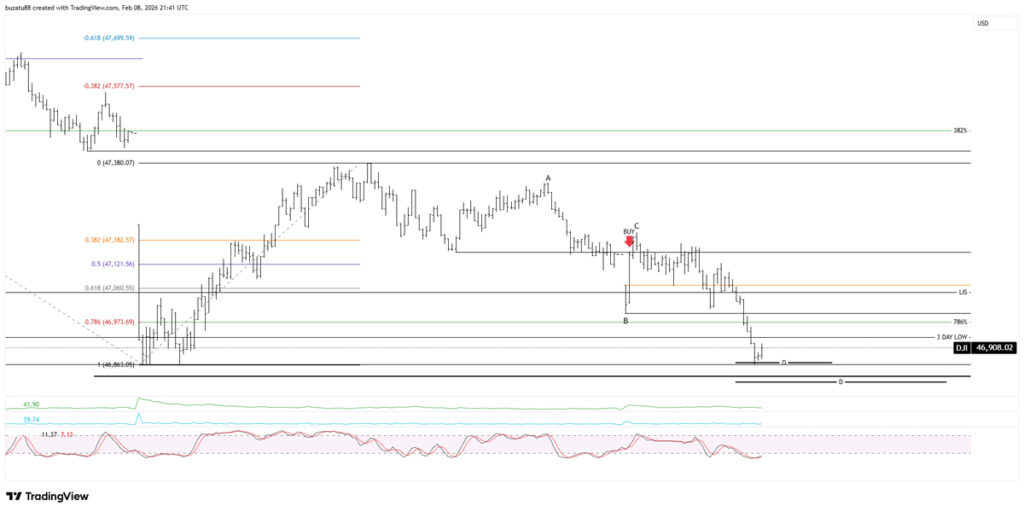
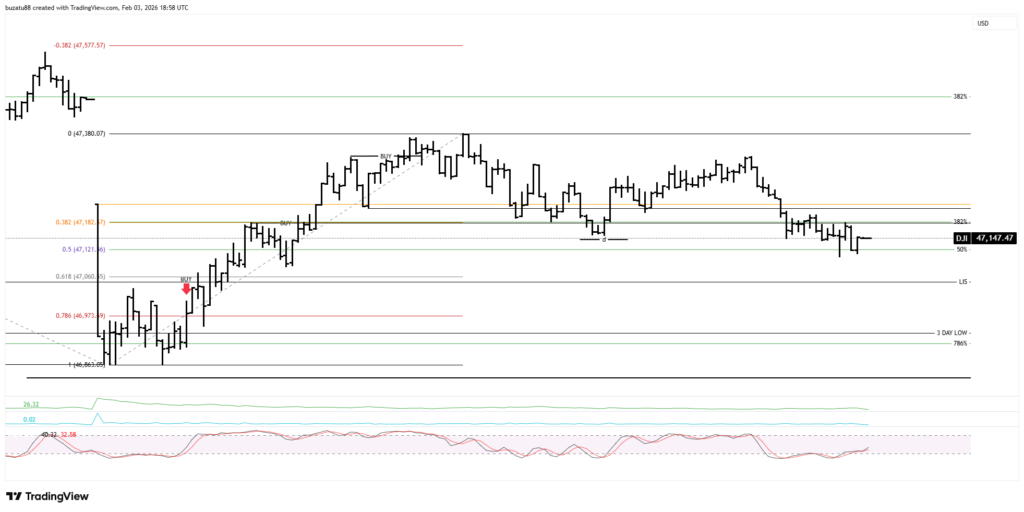
Market weakness illustrated on the Dow Jones Chart

The trend is still down!

Final Thoughts

These are the core Dow Jones trading patterns I rely on every day.

There are other patterns I occasionally use, but these are the most reliable.

The real key to trading is combining multiple confirmations:

  • Fibonacci levels

  • Price structure

  • Pattern symmetry

  • Market context

The more factors that align together, the higher the probability of a successful trade.

And remember:

Patterns become more reliable on higher timeframes.

Dow Jones Trading Patterns I Use: Fibonacci, ABCD, Gartley & Market Structure Read More »
‘’Missed Trades, Bias, and Recovery – Dow Jones Trading Journal’’

INTRO In this Dow Jones trading journal, I document a session filled with missed opportunities, bias, emotional decisions, and eventual recovery.
This post is written for traders who are learning how market structure, patience, and discipline matter more than being right about direction.

 MARKET CONTEXT

Date: Monday, 17th November 2025
Market: Dow Jones (YM)
Session: US Open
Market Condition: Volatile with failed breakouts and reversals


So, the 14th of November bar was on a Friday, and it closed in a doji /hammer style. Now, since Tuesday, the 14th of October, the market has rallied significantly, going into new ground until Wednesday, the 29th of October. Then it had a ‘’bad retracement’’ (a bad retracement is when the market overlaps and hardly goes anywhere), and it finished on a Gartley in 50%. With a beautiful bullish hammer bar. Providing a buy signal.

It succeeded in going up into new territory on a great four-bar rally. At which time it made a false break, falling 843 points and making a reversal pattern as well. But now what has happened is that from my research, a big down bar like that followed by a doji bar means the next day should be a bull up bar in more than 85% of the cases.

And this takes us to the current day. I see that the market hasn’t overbalanced the last correction. In fact, it has stopped 36 points above the 1:1. So, for starters, I am bullish on today’s action, but even though I have formed an opinion, I still have to wait and see what the market is telling me once it opens

Market stopped 36 points from overbalancing

BIAS & PRE-MARKET ANALYSIS

Looking at the hourly and 15-minute chart, I see that the market has finished exactly on an ABCD, coupled with a 50% retracement. This further strengthens my bullish hypothesis. But I still have to be mindful that the medium-term 3-day trend has been breached and it has closed below, and this signifies a change in trend, and also the market is still under the 50% retracement, which has weakness connotations as well

Indecision about forming an opinion on the market direction

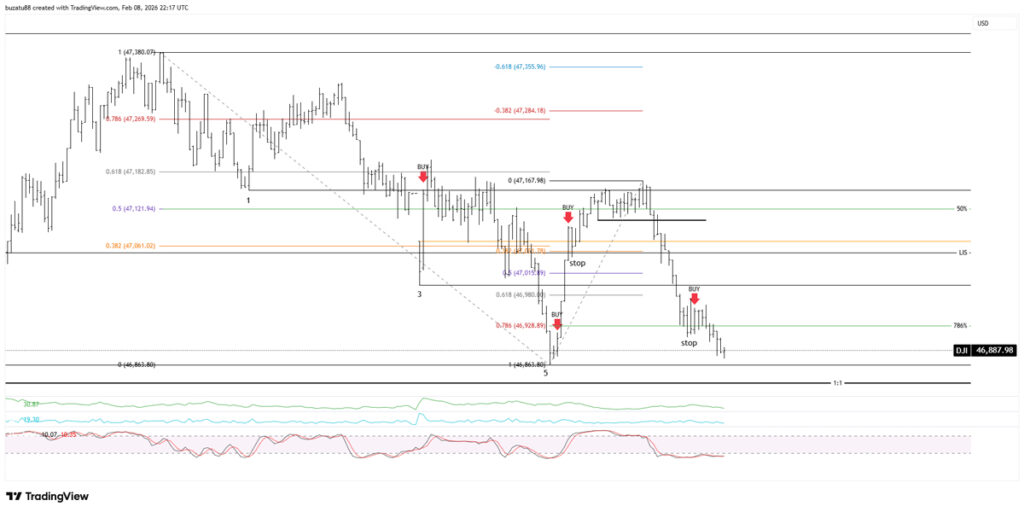
I am so bullish on this that I am beginning to think I may be very biased and look for any buy opportunity when there isn’t any. I have to wait and see what the market is doing. Looking at the 3 min chart right now, it must break the small double bottom low at 46,864 and break through the 1:1, which is at 46,834. And the above make-or-break levels are the top of Friday’s range, sitting at 47,380, and then the 382%, coupled with the gap from yesterday’s action

Biased look on the market

FIRST TRADE – BIAS TAKES OVER

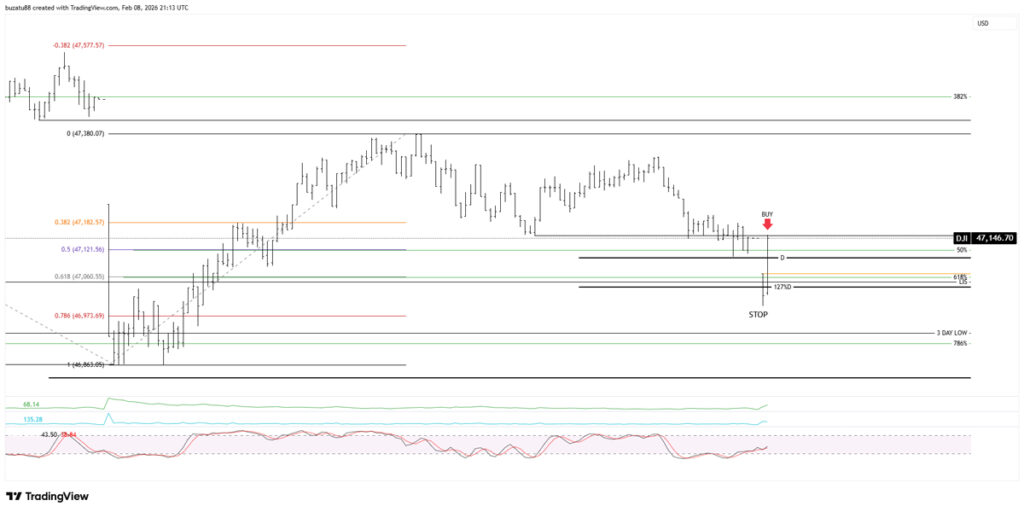
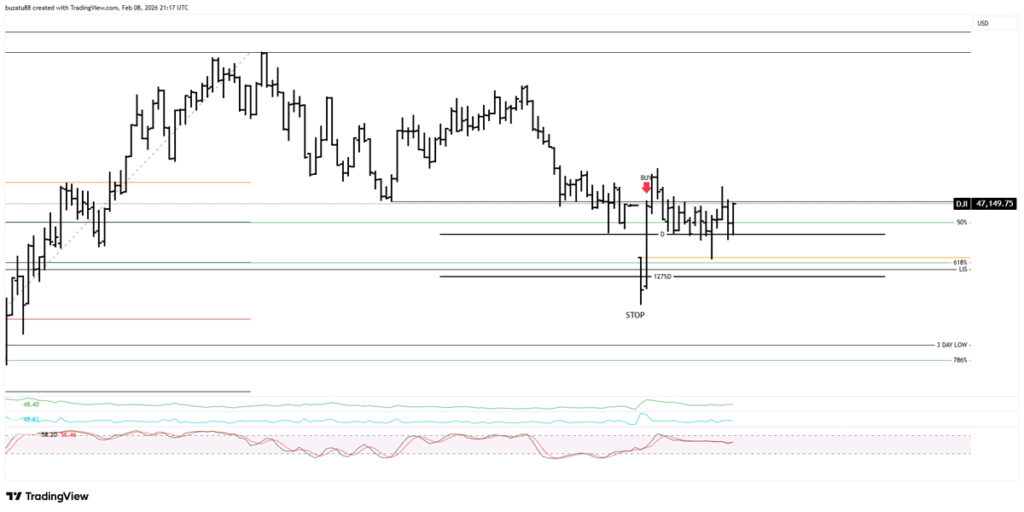
The bell has rung, and the market has opened lower than the ABCD. This suggests a continuation down, so let’s see. The second 3-minute bar has reversed and closed up in a strong manner right at resistance from a 618% Gartley, coupled with the LIS (Line in the Sand) from a few weeks ago. Even though it has surpassed the 1:1 ABCD, I will take a long here because it supports my bullish case, and if I look closely and extend the CD line by 1.272%, it will measure to 47,038, and the low is 46,995. I am taking a buy position here, 3 points above the high of the second bar of the day, with the stop below the low of the day

First trade - bias takes over

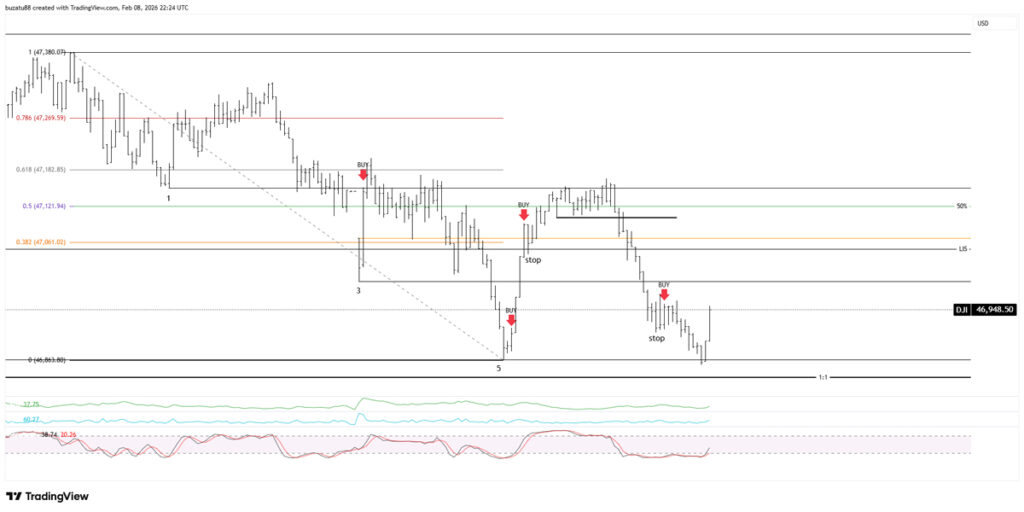
The market has triggered my order, and I am in the market and underwater for 45 minutes now. I am thinking I have made a mistake, and the trade won’t work, but I see it has retraced nicely from the opening price. All in all, I will let it play out, but too much time has passed, and it’s anyone’s game now. I was very sure it was going to go up, but now I am not so sure

Trade not going as planned

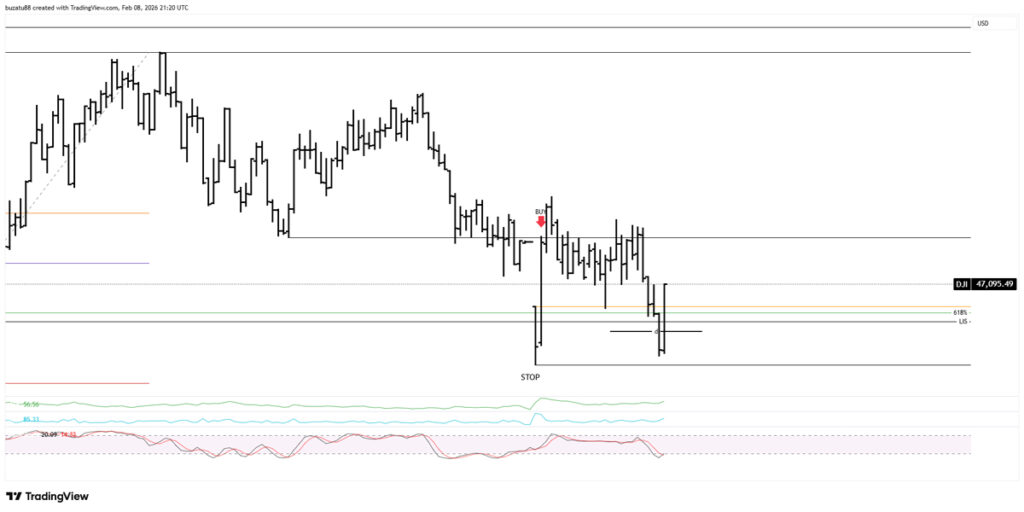
The market has made an ABCD and rallied again, but I almost got stopped out. It does not look good so far

There's still hope

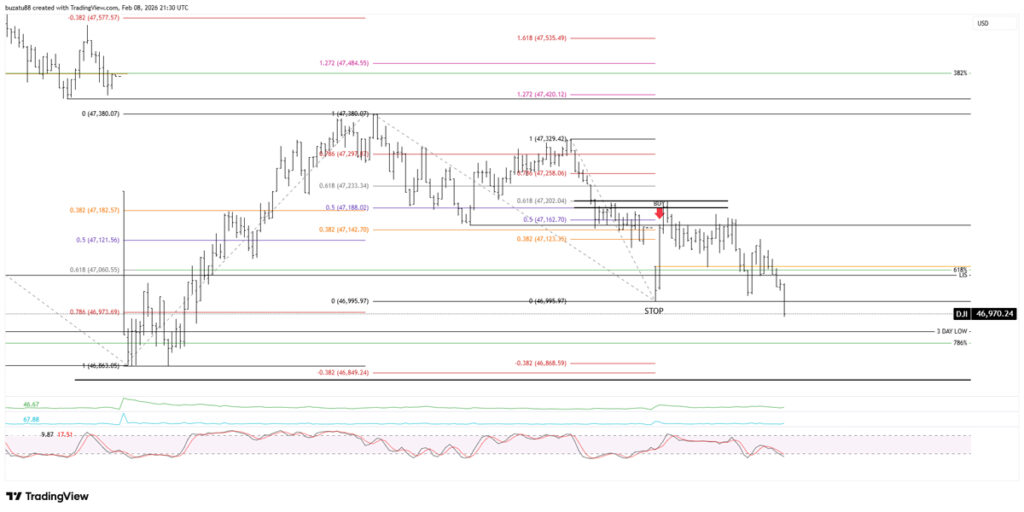
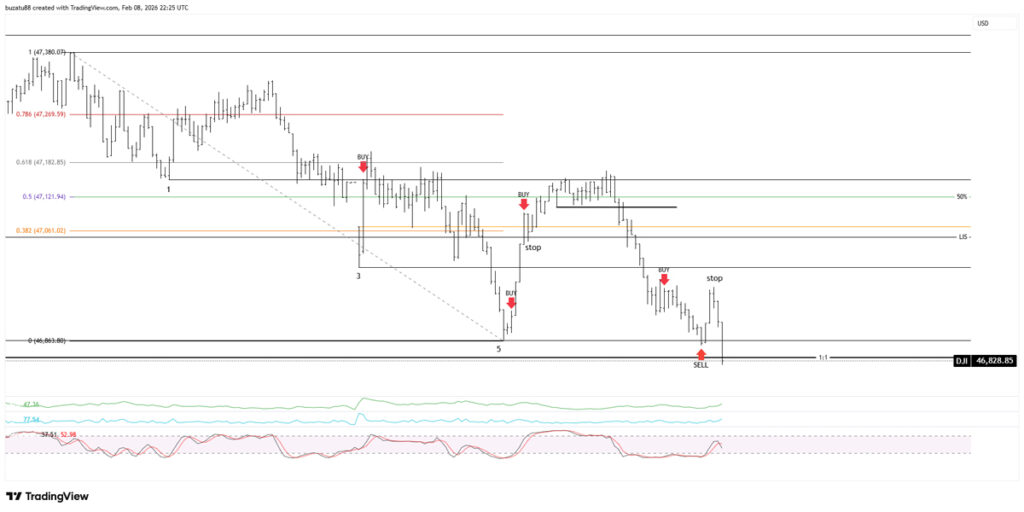
We went below the low of today, and I have been stopped out. I am out of the market and assessing my next move. It hurts, but not as much as I would have thought. I tested my hypothesis, and it didn’t play out. It’s funny how you can always find a reason why it didn’t after the fact!

Lesson:

For example, where I took my position long, the market was sitting right at resistance, having surpassed an important ABCD, and it finished the move right in a combined ratio of 618% from CD and 50% from AD. That is the geometry that has pushed the market lower, but I chose to ignore it, so I lost. Alright, now back in the saddle

Lost first trade

SECOND ATTEMPT – CONFUSION & OVERTRADING

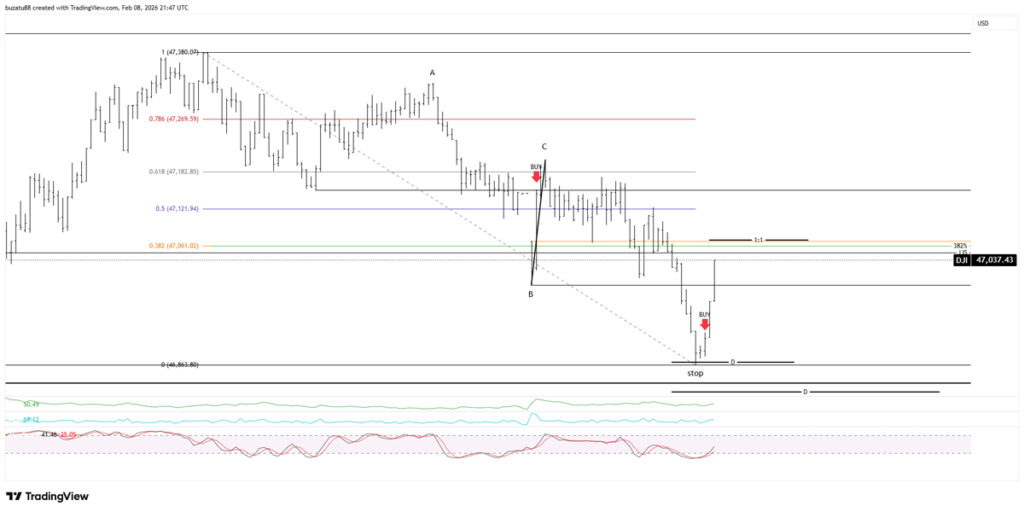
The market has hit the bottom the 3rd time, and we have an ABCD right there, the stochastic is oversold, and it has made a reversal pattern with a butterfly pattern in 1.618% attached to it. It is better to sell double bottoms than buy them. The reason is, when traders see weekness they tend to hammer it. That is why markets fall faster than they rise. I will take a long here, and if it goes below the low, I will sell short

Going long again

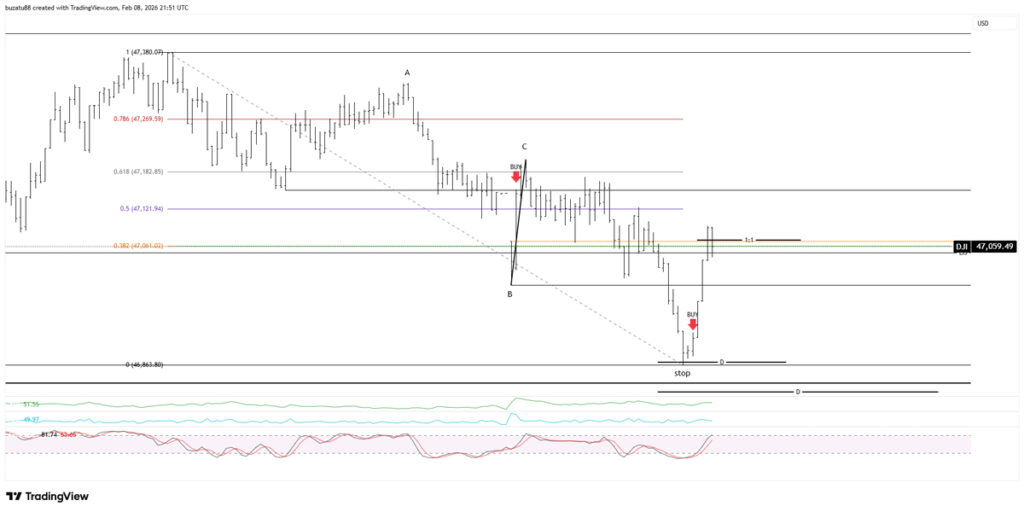
So far, the market has agreed with me, but now we have to negotiate a strong resistance zone where the 382%,1:1, LIS, and the open are aligned together. This is strong resistance, and if we go through, we will go much higher, so let’s see

Market agrees with long

It has blasted through the levels and reversed. It’s to be expected because there is strong resistance there. And yes, it could return the other way, but I will keep the trade, and if it goes above, I will add to it. I forgot to mention I have moved the stop to breakeven after the second bar up

Market breaks strong levels

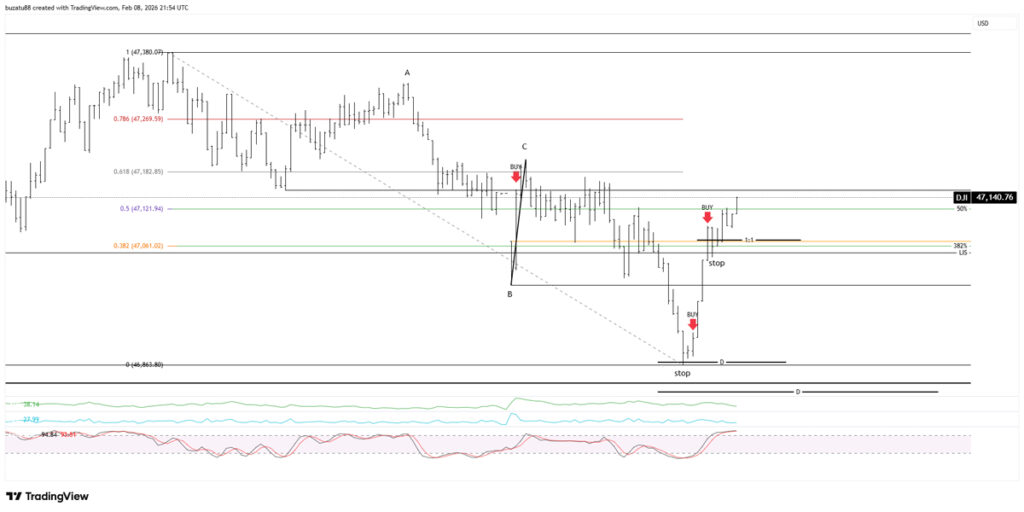
I have added to my trade, and the market has moved above the 50% and is close to the resistance from yesterday

Adding to trade

The market is moving sideways, it’s not the action I want, so I’m moving the stop loss to breakeven on the add-on trade

Moving stop loss to breakeven on add-on

I have been stopped out of both my trades. It hurts! I couldn’t exit at a profit for the first trade. I kept hoping!

Stopped out of both trades

📌 Mistake:

What I should have done was to move both stps bellow the trading range that has formed, and after the false break, I should have reversed short because all the signs are there. Hope is a hard thing to negotiate when you are in a trade

What I should have done

We have a 1-3-5 pattern with a double bottom pullback in 786% and a reversal bar signal, albeit not a very good one. I will take a long here 3 points above the 18:12 bar with a stop 3 points below the low. And if it fails, I will go short if it reaches the triple bottom, as usually the 4th time brings on a good trade, I will wait and see

Trying another long

I have been stopped out in no time. I am out of the market and waiting on the sidelines. Today hasn’t gone very well for me so far

Stopped out again

We have made a new low at 48,855. The 4th try has held, and we may see the market going up. I would have sold, but it did not go 3 points below the low bar. The market came down and, after a short retracement, proceeded to move down in a ‘’bad continuation’’ fashion. That is always a sign of reversal in my book, but I see I have been making all the wrong decisions so far.

Market giving a sign of reversal-although a short one

FINAL TRADE – PROCESS RETURNS

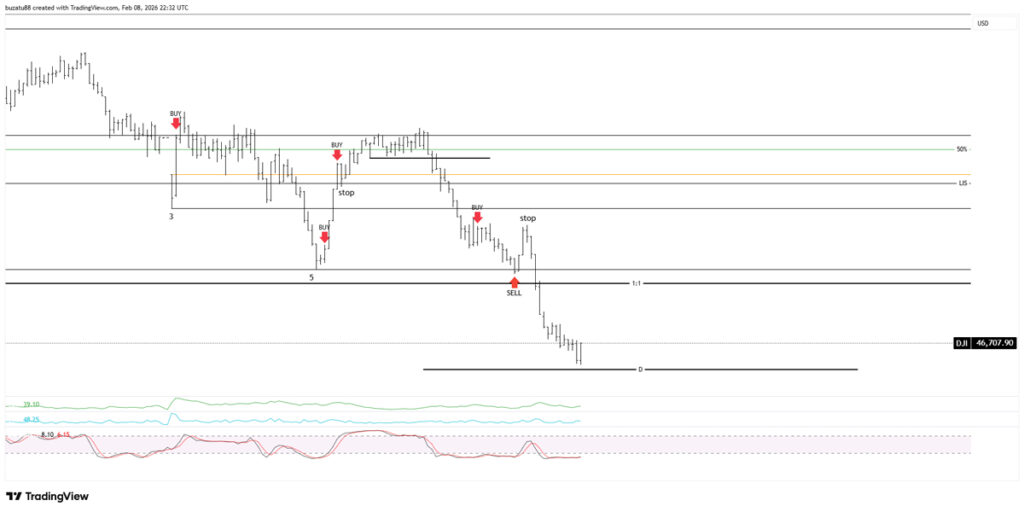
Market reversed, and I have sold it at the 4th low

Sold short the 4 bottoms

I have moved the stop up to breakeven after the second bar down after the entry. And we have overbalanced the previous correction to a major degree, so let’s see what will happen. The market has gone down close to the big ABCD from the day’s action and is showing signs of bad continuation

Market overbalanced previous major degree

The market has moved through the ABCD and overbalanced. This is usually a good sign that the trend will continue. I have my eyes on the 46,495 low as a possible target. That being said, it is 19:36 now, so I want to protect some profit, so I will move my stop down 3 points above the 19:36 bar

Trend showing good signs of continuation

I have moved my stop loss again

Trailing stop down

We have gone below the 46,495 major low. I have moved my stop down two more times, and I was finally taken out of the market. I have lost two trades, which total – 217 points, and won one trade, which has made me +374 points for a total of + 157 points. This would have been a good day in the end.

But I risk 3% of my account per trade. That 3% is divided by the number of points I risk, and it gives me my stake (how much I put per point). And after all that, the amount I made is a measly £78 from a £5000 account. If the account were bigger, it would have been a pretty good day. This goes to show that the amount of points you win doesn’t always translate to what you would think. And the market has moved sideways to up from that false break into the close

Finally taken out of the market-good trade

📌 Key Lesson:
Points do not equal money.
Account size and risk management matter more than being right.

 KEY TAKEAWAYS

Trading Lessons from This Session

  • Bias blinds you to resistance
  • Missed trades are better than forced trades
  • Structure beats opinion
  • Risk management defines results, not points

‘’Missed Trades, Bias, and Recovery – Dow Jones Trading Journal’’ Read More »
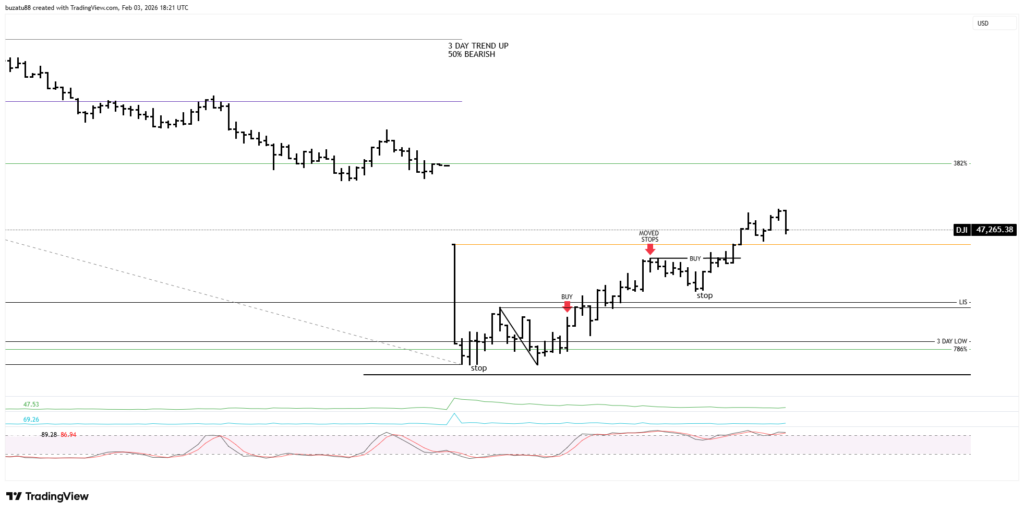
“Dow Jones Intraday Trading Analysis | Market Structure & Volatility”

This Dow Jones intraday trading analysis documents how I approached a volatile market session using structure rather than prediction. The market opened with increased volatility, and my focus was on how the price reacted around key retracement levels, ABCD patterns, and the average true range. I was not interested in guessing direction but in observing what the market was doing and responding accordingly.

Throughout the session, I paid close attention to false breaks, overbalance, and how the price behaved around support and resistance. Entries were taken only when the structure aligned, and stops were adjusted as the market provided confirmation. While profits were made, there were moments when I questioned whether stops were moved too aggressively. This breakdown is not about perfection, but about execution, discipline, and learning from the decisions made in real time.

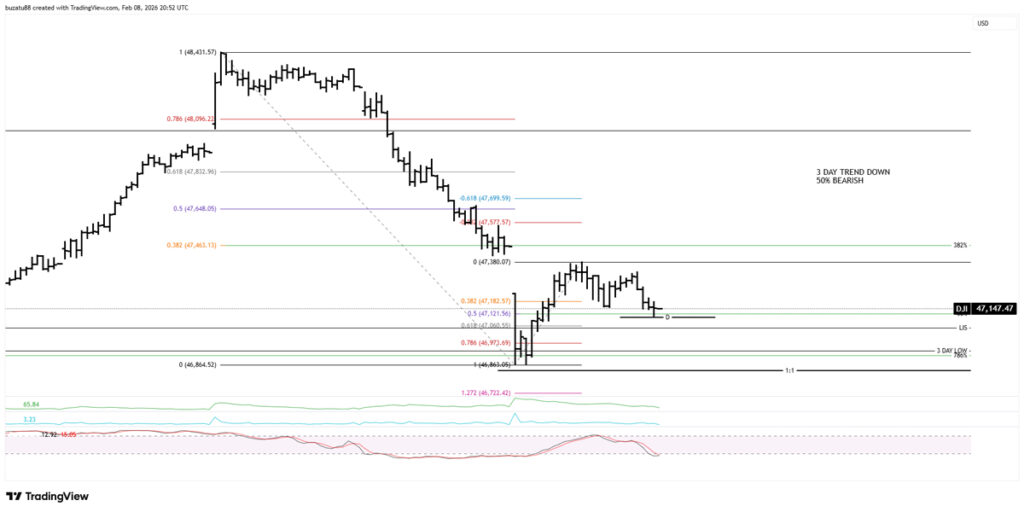
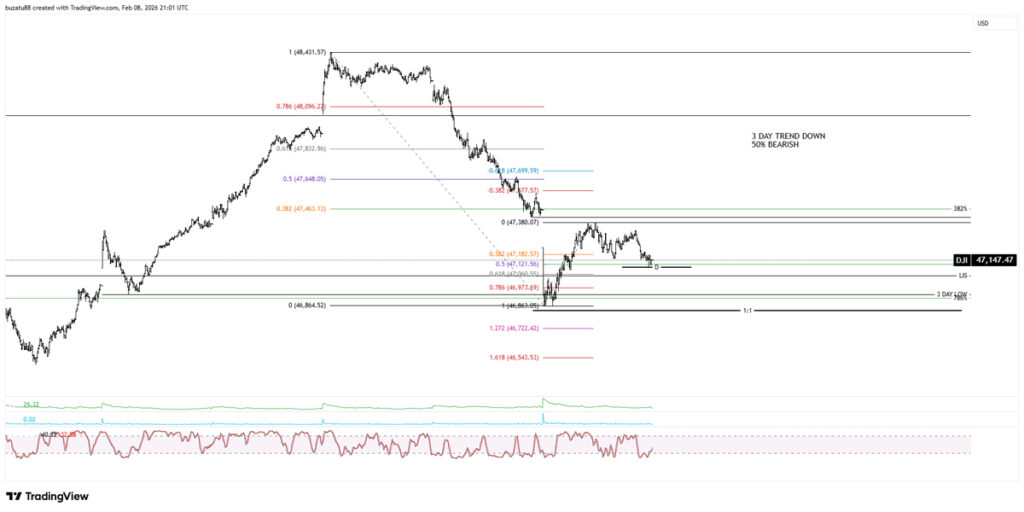
On the 13th of November 2025, the Dow Cash market fell 843 points. About 300 points more than the average at the time, and stopped at the major 50% retracement, which provided support. This pattern here is showing me, based on my research, that a continuation is possible of at least half the points of the 13th of November daily bar. I will have to wait and see…

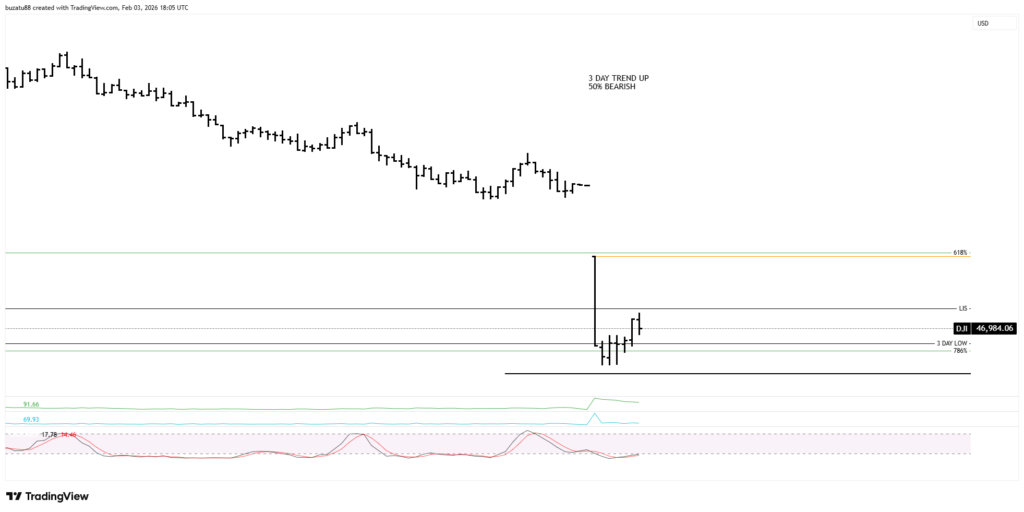
The 3-day medium trend at 46,934 is still up, but from a stochastic point of view is overbought. And the 50% support has been breached slightly. In my opinion, right now the market will move lower, but I have to wait and see what signs I will receive once the market opens.

The market has opened on a gap down below the 618% 500 points down, and the average true range is 580 points. Right now, it has made a false break of the 3-day low and 786% and did not overbalance the 1:1 with the previous correction. This is a buy signal in my book, but I will wait for further confirmation.

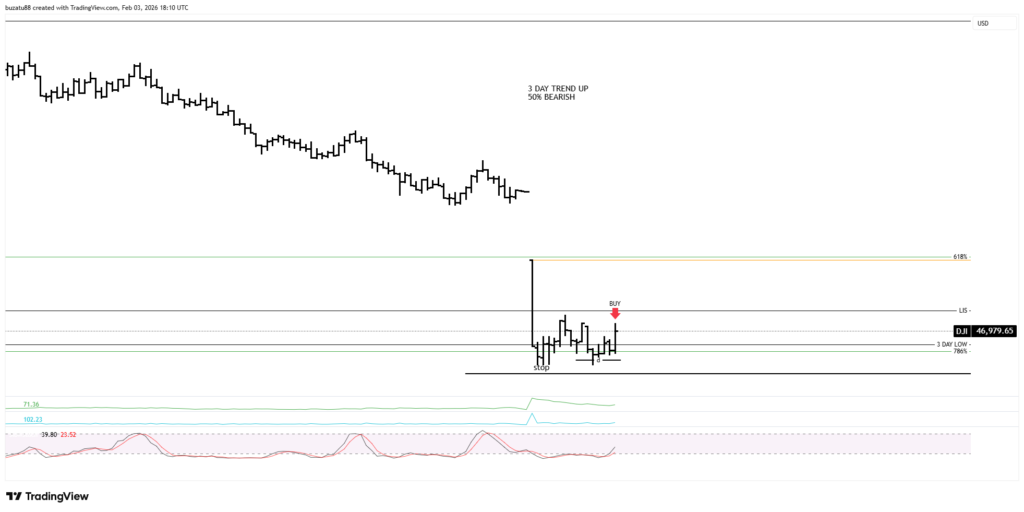
We now have a small ABCD into a double bottom in 786%, and the ATR has been taken out by 18 points. I will buy 3 points above this 15:15 bar and put a stop 3 points below the range

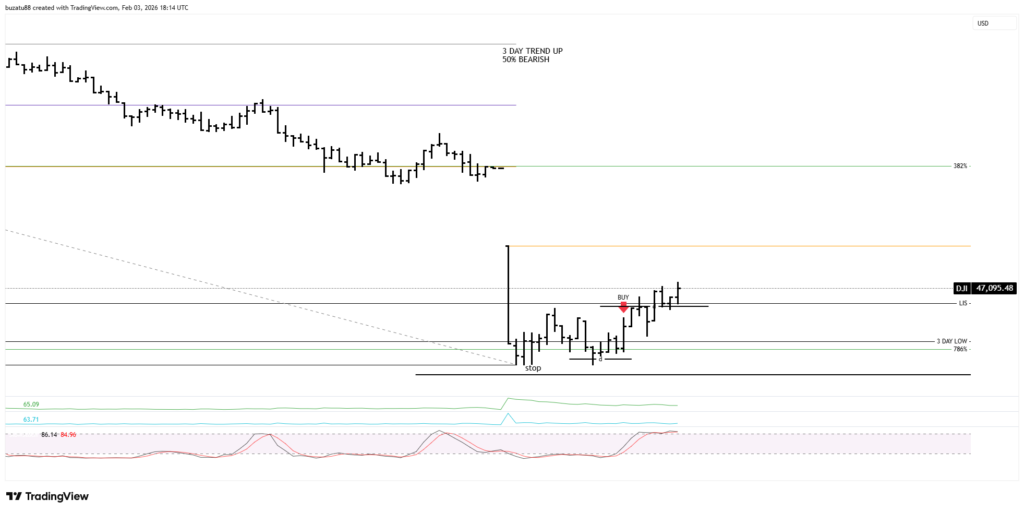
The market pushed above the ABCD and LIS resistance, which is a good sign for now. Not a strong move up, though. I have moved stop to breakeven.

I have added to the position on a breakout

I have moved both stops up

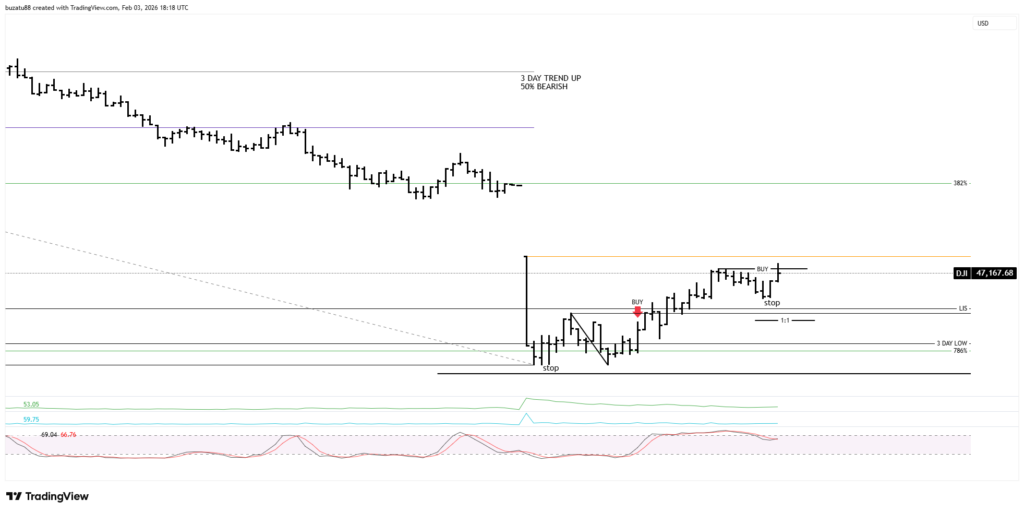
I HAVE ADDED ONE MORE TIME

I have moved my stops up, and I am waiting to see if it will reach the 382%, which is at yesterday’s close

 And the 15:48 bar has taken me out. First trade +267p, second trade +92p, third trade has lost me -53p. For a total of +306p. I could have stayed longer in the market, but I was afraid my profit would be much reduced. So, I moved my stops up and took a good profit. I am pleased with the outcome, but I can’t shake the feeling that I should have waited a bit longer and not moved the stops so close

Right now, I am pleased that I have exited the market because I would have been stopped out at a much lower profit. This is interesting, though, because we have made an ABCD balanced retracement a few points above the 382% of the whole move, which is right at a known support level, and the market has closed up. This suggests a long again. The only thing I don’t like is that it has overbalanced the 170 points of the last correction.

That trade would have been a loss if I had gone long. I will stop trading for the day. I am pleased with the profit

It has gone up 517 points. It is now 18:48, and I can see two possibilities…

Given that the market is at a 382% RET paired with support and an ABCD, it has a chance to go and reach yesterday’s closing, where incidentally the big 382% of the past two days is. Or because we have gone up so much, we might see a trading range up until closing. I am more in favour of the trading range scenario, so let’s see

This is what happened next… The 3-day low has held, and the market has closed above the 50%, so it is still in a strong position. The daily bar is a doji bar. A down bar followed by a doji bar in my research suggests the next-day bar should be bullish. We will just have to wait and see

“Dow Jones Intraday Trading Analysis | Market Structure & Volatility” Read More »
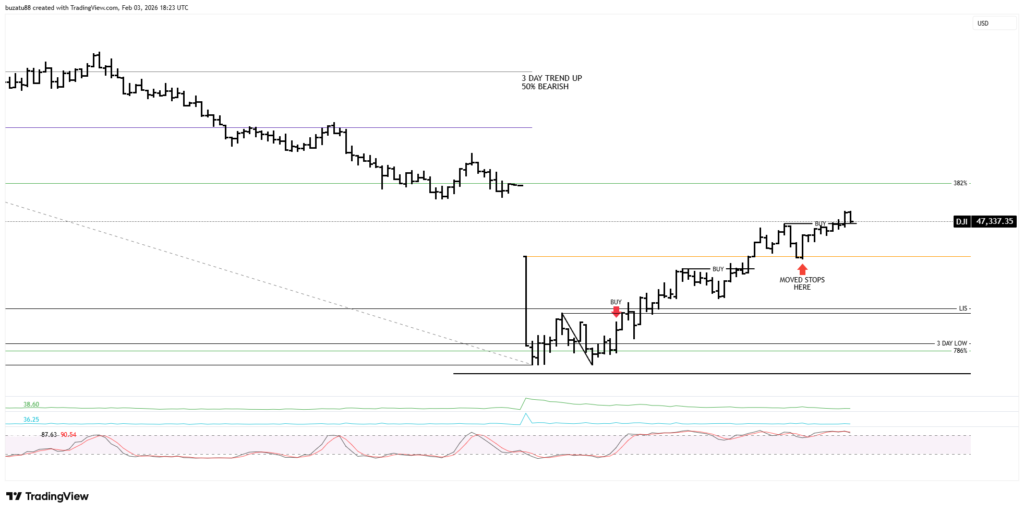
Missed First Trade Of The Day

Ok, this day is the 13th of Nov 2025, and I am looking at the Dow Jones market. The 3-day trend is up, and the 50% balance point is bullish. So, the medium-term trend is up. This is our starting point for the day…

Going down from the daily to 1 hr and 15 min time frames, we see that the market has formed a bullish rectangle. The 1:1 with the last correction is 396 points down at 48,.038 exactly, where major support lies from the old high.

We are in no man’s land right now. The average true range is at 514 points. The ranges have expanded. Yesterday’s range went up 503 points, then returned to congestion.

Looking at the 3 min chart, if the market exceeds yesterday’s high, I will look for long trades. If it moves below the 1:1 and support levels at 48,038, then I will look for short trades.

The market has opened on a gap down right at the ABCD, exceeding it but closing up. The market has hit support, reversed and made a small ABCD, saying it might want to go down. I won’t take a short here because it is quite a weak signal. Now it has penetrated the day low. It’s 15:21, and the market can’t break through; it is in a trading range right now

The market has made a perfect 382% in resistance. That is a sell signal, but I did not see it at the time. And now it has reached the 1:1, exceeding it slightly

It’s 15:57, and I have missed a good trade. The market has closed the gap from yesterday

The market moved down violently, and I have sold the first major retracement. The first one rarely holds. Then it overbalanced the first correction, which would mean the trend might be in trouble. But it made an ABCD balanced correction. So that gave me trust to sell the double bottom and move the stop on the first position at breakeven. Now at the big 382%, I have moved both stops 3 points above the bar that touched the 382%

I have moved my stops after the 382% on the high of each bar that closed below the previous bar. There were two bars, and after a tight trading range, I was taken out of the market. I have made 175p + 92p= 267 points. I find it pretty good, it is now 19:30, and I will stop for today. I am still upset because I have missed the first trade.

The market succeeded in reaching the 50%, coupled with major support and closed on that level. Great trend day! The market fell 843 points. It still did not turn the 3-day trend down, but if the 50% fails, the market is in a weak position

Missed First Trade Of The Day Read More »
Scroll to Top